Navigating the British Financial Landscape: A Comprehensive Guide to the Best Expat Bank Accounts in the UK

The Complexities of Landing in the UK: Why Your Choice of Bank Matters
Moving to the United Kingdom is a whirlwind of bureaucracy, from securing a visa to finding a flat in a competitive rental market. At the heart of this transition lies the British banking system, a framework that can often feel impenetrable to newcomers. Without a local bank account, managing everyday life—receiving your salary, paying rent via standing order, or even setting up a mobile phone contract—becomes an exercise in frustration. The challenge for most expats is the ‘chicken and egg’ scenario: you need a permanent address to open a bank account, but you often need a bank account to secure a permanent home.
Traditional high-street banks in Britain have historically been rigid, requiring months of utility bills or a UK credit history that a recent arrival simply does not possess. However, the rise of fintech and the evolution of international banking services have fundamentally changed the game. Today, expats have a spectrum of choices ranging from legacy institutions with global footprints to agile digital-only challengers that can verify your identity in minutes via a smartphone app. Selecting the right one depends entirely on your financial goals, your residency status, and how often you intend to move money across borders.



The Digital Vanguard: Speed, Accessibility, and Low Costs
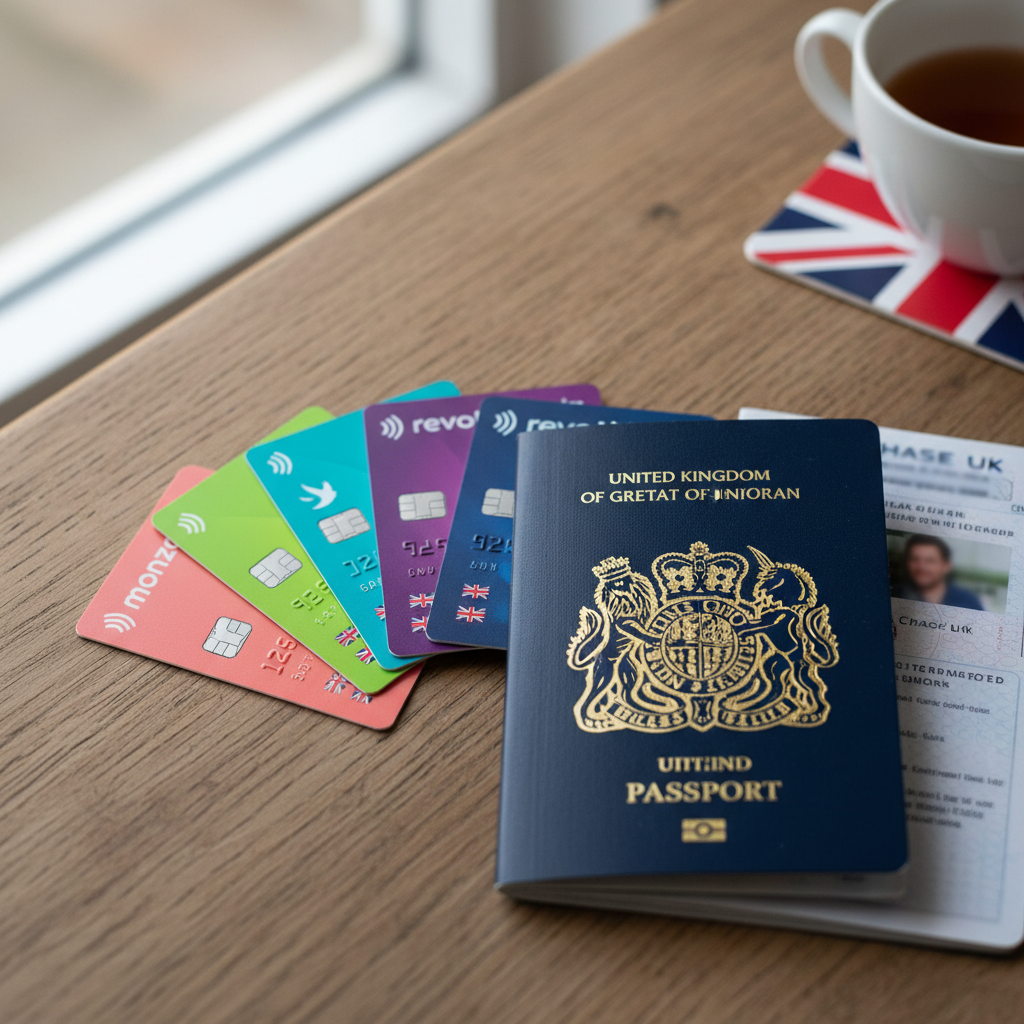
For most expats, the journey starts with digital-only banks like Monzo, Starling, or Revolut. These platforms have disrupted the status quo by offering ‘instant’ account opening, often requiring only a passport or BRP (Biometric Residence Permit) and a short video selfie. Unlike traditional banks, they are remarkably lenient regarding the ‘proof of address’ hurdle, making them the perfect entry point for those currently staying in short-term rentals or Airbnbs.
Monzo and Starling: The Full UK Banking Experience
Monzo and Starling are fully licensed UK banks, meaning they offer Financial Services Compensation Scheme (FSCS) protection up to £85,000. This is a critical technical detail; it ensures your deposits are backed by the government. Starling, in particular, is highly regarded for its lack of foreign transaction fees, making it an excellent companion for those who travel back to their home country frequently. Their apps provide granular control over spending, instant notifications, and the ability to set up direct debits, which are essential for paying UK utility bills.
Revolut: The Multi-Currency Powerhouse
While Revolut only recently secured a UK banking license and operates under different regulatory nuances compared to Starling, it remains a favorite for expats. Its primary strength lies in its multi-currency accounts. You can hold, exchange, and send dozens of currencies at the interbank exchange rate with minimal fees. For an expat who still has financial obligations in their home country—such as a mortgage or student loans—the ability to swap GBP for EUR, USD, or INR without the predatory margins charged by traditional banks is a massive financial advantage.
Legacy Institutions: Stability and International Reach
Despite the agility of digital banks, traditional high-street institutions still hold significant value, especially for those moving to the UK on high-earner visas or with significant capital. Banks like HSBC, Barclays, and Lloyds offer a level of face-to-face service and a range of credit products—such as mortgages and personal loans—that digital challengers are only just beginning to emulate. If you plan to settle in the UK long-term and eventually buy property, establishing a relationship with a high-street bank early can be beneficial for your internal credit score.
HSBC Global Money and Premier Accounts
HSBC is often cited as the best ‘big bank’ for expats because of its truly global network. If you are already an HSBC customer in your home country, they can often help you open a UK account before you even board your flight. Their Premier service provides a dedicated relationship manager and allows you to see all your global accounts in one dashboard. Furthermore, the HSBC Global Money account allows for fee-free transfers between HSBC accounts worldwide, which is a significant technical perk for high-net-worth individuals moving large sums of money.
Barclays International Banking
Barclays offers specialized international accounts based in offshore jurisdictions like the Isle of Man or Jersey. While these are typically aimed at those earning over £75,000 or looking to invest significant sums, they provide a stable, tax-efficient way to manage wealth while living in the UK. These accounts often come with multi-currency debit cards and access to sophisticated investment platforms that a standard retail account cannot provide.
The Technical Essentials: What Every Expat Needs to Know
Opening an account is only the first step; understanding the underlying mechanics of British finance is what saves you money in the long run. One of the most important aspects to monitor is the ‘Exchange Rate Margin.’ Most traditional banks will claim ‘zero fees’ on international transfers but will bake a 3% to 5% markup into the exchange rate. To avoid this, many expats use Wise (formerly TransferWise) in conjunction with their UK bank account to ensure they are getting the mid-market rate.
- FSCS Protection: Always check if your chosen provider is a licensed bank or an Electronic Money Institution (EMI). Banks offer £85,000 protection; EMIs use ‘safeguarding’ to keep your money separate from their own, which is safe but offers different legal protections.
- The Credit Ladder: UK banks report to three main credit agencies: Experian, Equifax, and TransUnion. Digital banks are great, but ensure you eventually have an account that helps build your UK credit profile if you intend to stay more than two years.
- Proof of Address Alternatives: If you lack a utility bill, many digital banks will accept a UK driving license, a letter from your employer, or a university enrollment letter as a valid substitute.

Final Recommendations: Choosing Your Path
For the vast majority of expats arriving today, a ‘hybrid’ approach works best. Start by opening a Starling or Monzo account as soon as you have your BRP; this gives you a functional UK sort code and account number within days. Simultaneously, set up a Wise account to handle the initial transfer of your relocation funds from your home currency to GBP without losing thousands in hidden fees.
If your stay in the UK is intended to be permanent, or if you are moving with a family and require complex financial products, look toward HSBC or Lloyds once you have a permanent address and a couple of months of UK payslips. By combining the low-cost efficiency of fintech with the robust infrastructure of traditional banking, you can navigate the British financial system with confidence, ensuring your money works as hard as you do in your new home.